


Written by Suresh Sadagopan
There is a lot of unease about the currency depreciation, stock market turbulence, fuel price increases etc. There are so many factors that have a connection, some of which are apparent and many others which affect, but may not look like they are related.
That is why the news tells just part of the story but tells it like it is the full story.
Tightly woven strands
The media/ Social Media would have you believe that currency depreciation is due to crude oil price shooting through the roof, foreign investors fleeing India with their dollars, imports still remaining high and the need for dollars, gold imports, lack of AI investment opportunities, etc. These are all true and maybe impacting rupee dollar parity. But, the dollar is getting stronger against most currencies, not just the rupee.
Also, rupee weakening is not a sign that the country has gotten weaker. It indicates market realities where dollar demand is higher as we have to buy oil at higher prices, money is moving out into other markets which are perceived to be more lucrative, moving to US Treasuries that are now offering 4%+ returns, or for some other reason. A currency weakening can be helpful sometimes - like exports can become more competitive.
Money invested through ETFs will have to rebalance and sell or buy based on company weight changes in the index. Index weight changes ( like India weight in MSCI ) would mean buying/ selling as the case maybe. These affect stock markets/ dollar values. So we cannot conclude that there is a "selloff" in some company and something bad is happening in that company.
Stock markets are also reacting to various news items - from Trump's outlandish pronouncements, to closure of Hormuz strait, RBI signals, bellwether share results, weather report informing sub-par monsoon etc. Globally everything is interconnected; it is impossible to even point out what all can impact the stock markets.
However, the doom and gloom reports continue unabated and are well received with suitable dismay!
Gloom merchants
Media goes to town about the fact that Taiwan and South Korea have displaced the Indian stock market capitalisation and imputing that somehow it is a shameful fall from grace for India. Even before the ink dried both Taiwan and South Korea have fallen behind India like before. South Korea and Taiwan are only tech - 70% and 89% respectively. Whereas the biggest sector in India is Financials which is 28% and other sectors bringing in the rest.
Indian economy is supposedly doing badly. But GST numbers and IT collections tell a different story. For the record, Indian GDP growth for the last FY is 7.7% - the best among the big economies. There will be many who would come out and cast aspersions about these figures. Yet we are fully willing to accept 5% GDP growth in China GDP and the "growth" in their exports, even though their real estate has collapsed, banking sector is in crisis, companies are shutting down across industries, there is a major employment crisis, wages are not paid, etc.
The howler however is Bangladesh, Pakistan etc. are apparently doing much better than India! And poverty in India is far worse than Sri Lanka, Pakistan, Bangladesh and Afghanistan ( when many around India are dependent on our aid, food/ pharma and other exports ) according to some "respected" polls from the west! It is sad that such nonsense is being amplified here.
The fuel price increase globally is a factor of wars, supply disruptions, surge in crude and gas prices etc. The prices of fuel have been hiked by the government now, which has led to major gloom forecasts. Fuel prices have gone up by over 42-54% in the US, 18-20% in the UAE, 16-30% in the UK, over 10% in China. In India Petrol/ Diesel/ LPG have gone up between 8-10%. Inflation has inched up, which admittedly is not good. But things are not anywhere near as bad as is reported. But things can be rough for some time in the future.
The turbulence ahead
This decade has been a chaotic and turbulent one till now. Nor does it seem like the choppy waters would turn calm for some time to come.
At a human level, AI is the new bull in the China shop. AI is making a very strong case for replacing humans in many fields, which impacts jobs and increases unemployment. There is genuine concern - what youth world over will do if AI takes over much of what humans do?
The results from AI have not all been uniformly good. Still, AI is affecting multiple sectors. AI bust has been predicted at least for a year now, as there is no foreseeable payback for the hundreds of billions being sunk in. But even if AI blows up, the technology has shown enough promise to be around and be in our midst in the future as well.
The trade wars have still not abated and trade flows have been disrupted. Energy supply lines may remain strained going forward too. There could be more wars, some of which had been anticipated but have not yet happened. Nationalism & protectionism is becoming the norm. While the dark clouds are hanging low, let us see what is it with our country.
India story
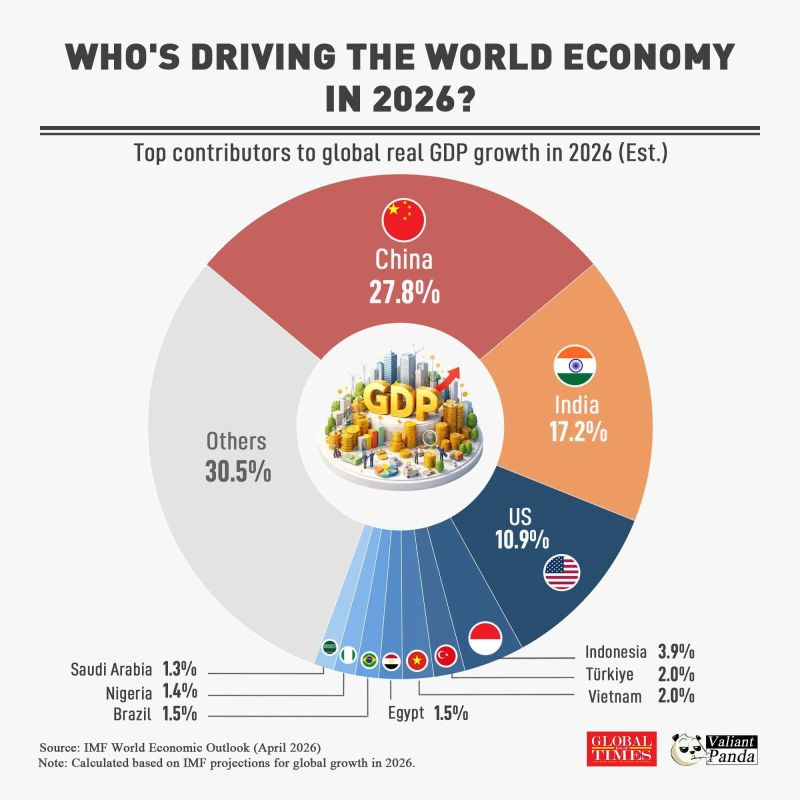
With all the doom and gloom we are enveloped by, India is doing rather well.India is contributing 17.2% to global GDP growth, ahead of the US.
Indian exports have risen by 4%+ from USD 825 billion in FY 25 to USD 860 billion (est ) for FY 26, in the midst of all the chaos. Defence exports are rising. The current export figure is Rs.38,400 + Cr as opposed to Rs.684 Crs in 2014, a 50 times increase! There are hundreds of defence, aerospace, armament manufacturing firms now that augurs well for the future.
Electronics exports are surging too, thanks to the PLI schemes by the government for Electronics and other industries. Mobile handset manufacturing has taken off and other ancillary industries are establishing slowly, solidifying this ecosystem
New train sets have been launched for high speed transits. Vande Bharat trains have upped the benchmark in speed and convenience and even indigenous "bullet trains" under 300 kmph are in the works. 98% of the rail network is electrified. 70,000 kms of rail network has been laid in the last 10+ years.
The space sector is doing well with the first private launch of the Vikram rocket from Skyroot Aerospace in 2022. ISRO by itself is doing well, which is well documented. There are an estimated 400 companies in the rocket, space and satellite manufacturing space now. The global space market is about $650 billion and is projected to rise to $1.1 trillion by 2034. India has just a 2% share now and wants and could move to 8-10% in 10 years.
Chip manufacturing was all but absent in India. However, steps have been taken to bring in companies at different stages in the ecosystem. Various plants are coming up in Gujarat, Assam, Odisha etc. It is a modest start. But, if everything goes well, 10-15% of India's chip requirements will be met internally by 2030! And eventually ( in another 10 years or so ) , India hopes to capture 10% of the world's output. Quantum Computers are being built in India and Quantum communication networks have been laid, although on a limited scale for the armed forces.
India is ahead of its global clean energy commitments and has met its 2030 goals in 2025 itself. About 26% of electricity generated is from renewable energy sources. About 50% of the installed capacity even today is renewable energy but the capacity utilisation is just half due to still developing transmission infrastructure and prioritisation of other energy sources by SEBs. Ethanol blending is happening too; but the transition is somewhat messy.
Logistics cost has been very high in India (about 13%), which over a period has come down to 7-8%, which is slightly higher than in advanced economies. Transport corridors and coastal shipping is being scaled and augmented, which will improve product movement even more and would further shave off the logistics costs.
There is also a huge push towards ship building with a National Shipbuilding Mission with an intention to save the huge amount of foreign exchange ( about $110 billion annually ) we are spending now. The mission aims to be in the Top 10 ( currently rank 12 ) by 2030 and in the top five by 2047. Port infrastructure is being upgraded and major new ports like Vizhinjam, Vadhavan and the port at Andaman & Nicobar are being developed.
The government has now come up with a Bharat Maritime Insurance (BMI) pool of Rs.13,000 Crs to break the monopoly of London and Europe based insurers who are acting tough and hiking insurance premiums massively ( sometimes going up 10 times ). This is a mafia that our government has taken steps to break.
These are some of the things happening in the country and these and others augur well for the future. The current rupee depreciation is hardly the only time it has happened. Rupee had fallen about 18-20% during 2011-12, 13-15% in 2013, 10-12% in 2016, 10% in 2018 etc. ( see this short video - https://www.instagram.com/reel/DYTeUmOqT_o/ ). Yet the stock markets have offered returns that have covered the depreciation trench and have given excellent returns. We all tend to look at what is happening now and tend to form our opinions on that. This is called the recency bias.
I have just listed some of the positives which can power India ahead. There are a lot many more. But not everyone wants to take a long-term view - not "smart money" managers...
The not-so-smart- money managers
We keep hearing about smart money, which generally is institutional money from around the world. Currently, this FII money is moving out and is creating dollar flight, which is affecting both the stock markets and making the rupee depreciate. This is going to other countries with AI play - smart money managers follow fads too! And it is going to US treasuries which are yielding 4%+ returns, which is seen as a safe haven asset ( or is it? - see this - https://www.youtube.com/watch?v=rmVWId1Wg3k and https://www.youtube.com/watch?v=8zbgsZ5kZ2Y )
Also, the fuel prices have shot up along with disruptions in global supply chains. These certainly affect India as we are dependent up to 85% for crude import requirements.
These "Smart money managers" are not so smart as has been seen during Global Financial crisis of 2008, taper tantrum in 2013, 2020 Covid scare and others, when these people pulled money out at the bottom and reallocated later at much higher valuations. Retail investors are called dumb for doing this same thing!
This is a human failing more than anything. Behaviour biases and mass hysteria plays out with all. Having access to more sophisticated reports or software does not matter. Dumb is dumb.
Advisor call
Simply ignore the noise. As we can see there are so many things that are positive and can play out well.
We need to have proper liquidity, contingency funds, provision for goals for three years and a proper allocation to non-volatile assets ( which we anyway do through asset allocation ). If we need to diversify into any other asset, we will let you know.
The focus should really be on being steady, disciplined, keeping the long-term focus and not being swayed by the crowd. That is the advice you would expect from a financial planner - staid, boring, repeated ad nauseam!
While that, it is still 100% true. Let us check this in a few years, shall we?!