

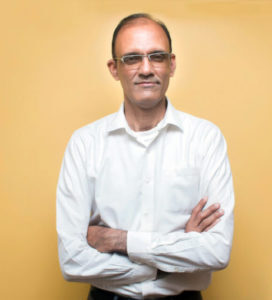
Written by Suresh Sadagopan
We are transiting an enormously turbulent time at this point- probably more than anytime in the past three decades, at least. But the churn is coming from various sources and may have the effect of disrupting our work and life more than ever before.
The turbulent decade
We have been on a roller coaster ride since the beginning of this decade, starting with Covid that disrupted normal life like never before and brought in enormous economic uncertainties on a global scale. Covid triggered disruptions in manufacturing as people were not able to join work and also due to logistics and supply chain disruptions because of which the parts and components needed for manufacture from other places ( sometimes from other countries in other continents ).
While Covid was still around Russia-Ukraine conflict started in 2022, bringing uncertainty in its wake. What started as a war between two nations became a war between Russia and NATO. That war meant destruction and loss of lives in both countries. But, it had larger implications.
The energy supply to Europe from Russia came to a halt due to the self-inflicted embargo on crude supplies from Russia, while they still bought gas from Russia, while accusing everyone else of buying Russian oil and supporting/ abetting their war machine! Then came the terrorist act of destroying Nordstream 2 undersea gas pipeline ( built, owned and operated by Russia & Germany ), most probably by the USA, which was a death knell for Germany and many other countries in Western Europe as fuel prices skyrocketed. People and the economy itself was majorly affected.
Conflict zones - opening up
While all these were at play, we witnessed the opening of another theatre of conflict in West Asia between Israel and Palestine. This conflict pulled in the USA on Israel's side and Iran on the Palestine ( Hamas ) side. Iran's proxies in Lebanon ( Hezbolla ) and Yemen ( Houthis ) also joined the conflict. This conflict slowly engulfed other countries of the Middle East that harboured US military bases, like Kuwait, the UAE, etc., where the Iranian military attacked in retaliation for Israeli-US strikes on them.
The above two major conflicts are ongoing. From the start of this decade, there have been many other conflicts/ tension-inducing events like the India - China Galwan conflict in 2020, Armenia - Azerbaijan conflict for control of Nagarno Karaback, with various countries backing either side.
We have witnessed a Syrian power coup a couple of years earlier, the Venezuelan president kidnap by the USA, capturing power and usurping their resources. We saw tensions between China vs Taiwan and various countries in the south china sea, Cambodia-Laos conflict, etc. There are other simmering tensions like between Venezuela and Guyana, over control of oil bearing lands. Trump has also staked a claim on Greenland and was fairly aggressive about it.
Pakistan for its part meddled with India and foisted a terrorist act on us that India retaliated with devastating force in Operation Sindoor. Pakistan has been facing internal tensions in the Kashmir regions it occupies, huge pushback and conflict with Balochistan and Khyber Pakhtunkhwa as well as with Afghanistan and Iran. Their penchant for mischief is undiminished in spite of so many internal troubles, and they are courting Bangladesh to target India from both sides. They are apparently getting plane loads of military equipment from China and Turkey in the past year, which have increased in the past couple of weeks.
Regime change and other alignments
Then there were regime change operations by inducing insurrections, protests, creating false narratives, spreading propaganda, and creating chaos in countries in India's vicinity like Sri Lanka, Nepal, Bangladesh, Pakistan, Afghanistan, Myanmar, etc., as well as in India itself.
USA was/is a major player in most of these operations, supported or abetted by the intelligence agencies of other countries that have an interest/ stake in that territory.
This was leading to alignments and counter-alignments in various theatres. China has always used Pakistan to contain India - it was evident by their complete support during Operation Sindoor. Turkey, Saudi Arabia, and Azerbaijan have also, of late, aligned with Pakistan. There are strange situations here. India has good relations with Israel, Iran, Russia, Saudi Arabia, and in fact most of the countries in West Asia. Some such countries are now aligned with adversaries of India - for instance, Israel and Russia stand behind Azerbaijan; but India stands behind Armenia!
India has good relations with both Iran and Israel and has tried to stay neutral. Pakistan has forged a NATO-like military partnership with Saudi Arabia and certain other Islamic nations dubbed the Mecca Alliance!
The World is becoming a very complex place where such alignments are making it difficult to clearly identify if a country is a friend or foe. Most countries have made peace with this situation and work with the other country based on specific issues of interest.
The brat with the gun
That is the USA! In the past, the US has been methodical and somewhat predictable in what it would do to allies and others. That predictability is dead.
Trump is idiosyncratic and mercurial. His thought process is a closed book to most. His team of ministers is a bunch of queer fish themselves. Hence, the US has painted itself into a corner and has taken some very extreme positions.
They have used trade-related tariffs as well as sanctions as weapons, most extremely. They have used them to threaten friends, allies, and others in much the same way. The US policy has degenerated from diplomacy and mature negotiations to bluster and bullying. This has unsettled almost all countries that are now looking for alternate markets and systems, away from the US.
This is resulting in churn and adjustments around the globe.
The AI disruption
In the last three years, AI tools and Large language models have come to the fore and are developing at a breakneck speed. Some of the capabilities they possess seem to confirm their omnipotence, resulting in getting work done at a fraction of the time that humans would have taken.
This is increasing productivity in some areas. This also means that a lot more can get done with the same employees, impacting new recruitment.
There is also a counter-trend where unbridled usage of AI tools has made the budgets go through the roof without commensurate gains. Hence, the jury is still out whether AI will impact employment or not.
However, the effect is felt in some industries more than others. IT is facing the heat as AI tools like Claude Mythos and others can generate complex code at a fraction of the time humans take. Chatbots have replaced humans in most situations thereby clearly impacting the armies of people who used to get employment in call centres. AI is helping in research of all sorts, with presentations, writing, all manner of communications, image and video creation etc. The swathe of what AI can do is staggering and breathtaking!
There is another conundrum in the AI world which no one knows how it will end. Companies are investing hundreds of billions of dollars without a clear path to monetising it.
LLMs, even MLMs and SLMs are sucking in a lot of money to develop and update. AI models also require huge data center capacities and compute infrastructure, which come with huge costs and environmental impact. An estimated $1.8 Trillion has already been spent and another $800 billion is expected to be spent in 2026 alone, by the likes of Amazon, Alphabet, Microsoft, Meta, etc.
The current models are mostly being used at the surface level by the general public, most of it for free. A small segment would used the paid versions. Hence, their bets with AI and hoping to get a good return on investment looks all but impossible today.
Corporates are evaluating AI models and are trying to figure out how they can benefit through productivity gains and reduction in HR costs. But that is hardly settled. Some are finding that the huge investments they have made are not paying off well enough, as they still need to deploy humans or other AI tools to verify if the results are indeed right. Hence, they are figuring that it could be simpler to have people on the roster like before!
There is talk of an AI bubble, which may implode anytime simply due to the money running out. That would bankrupt many companies and take with it lakhs of jobs. These are turbulent times indeed.
Navigating the stormy seas
It is painfully obvious that times ahead are anything but smooth. Let us not play God and come to premature conclusions.
For one, AI may not impact as much as it is thought it could. AI companies may collapse under the weight of their enormous investments. Even if that happens, AI tech is here to stay, as it is undoubtedly useful, and the collapse is mostly going to be due to overly optimistic, unsound investments. It is certainly not a referendum on the underlying technology!
AI tech will survive. Tech firms will become far more cost-conscious and develop tech at much lower costs, with better chances of success. If that comes to pass, we are back to square one - don't know how it will impact our work, earnings and our future.
Managing money when the tsunami is certain
The question that is looming large is how to plan in such uncertain times.
The temptation is to look for avenues to maximise returns. But that could be the quicksand that can make the future even worse than it could get. Hence, any legerdemain that one may do will mostly make one walk deeper into the swamps. So, are we condemned at this point to make do with what we have?
Much will depend on AI adoption, how it is going to impact productivity and employment, whether the current frontliners are able to engineer a soft landing, etc.
Since everything is unsettled and murky, it is better to be cautious than to be frisky. It makes sense to go over the goals, finances, and plan for a few worst-case scenarios. An eagle eye on expenses will certainly help with pegging the financial plan from getting uprooted, when the storm hits.
Also, it is important not to increase risks in the portfolio, as the external risks are already enveloping us.
It makes sense to de-risk one's career and learn a few new skills that would be least impacted by AI ( there are hardly a few; mostly jobs that need a person to manually do something ). It is for us to figure out how we are going to navigate this minefield.
We advisors expect to have a very busy time going forward as we will need to play the role of friend, guide and philosopher to navigate the troubled waters, than ever before! These are uncertain times for us all!